Showing posts with label packaging. Show all posts
Wednesday, July 22, 2015
Hygiene overkill
I'm all for food service practices that keep things clean, but sometimes it can go too far.
At the hotel breakfast bar:
I have never been too concerned that my paper cup is going to become contaminated before use. I'm sure the baristas at the fancy coffee shop grab paper cups from an unprotected stack, just as the deli man grabs a plastic container for your coleslaw from an unprotected stack. I don't see the point to this one.
At the same breakfast bar, the woman in front of me unwrapped her cup, filled it with coffee, and reached for a plastic top off the (unprotected!!!!!) stack. She inadvertently picked two from the stack. Did she put one back? No, she threw it away.
This offended my sensibilities. Fortunately she did a bad job of throwing it away; it only made it as far as the countertop. I picked it up and used it on my cup.
Tuesday, March 17, 2015
Still frittering away our resources...
Don't you feel all warm and fuzzy when you publicly complain about something and then you find that they've changed what you were complaining about?
Well, today I don't.
Two years ago I complained because I opened a new package of oats and found the tamper-proof band was made out of corn. What a waste of food.
This morning I opened a new package of oats and found a little change in the wording. Now it's made from "plants," not "corn."
Fifteen minutes on google reveals -- wait for it -- it's still made from corn, even though somebody in the public relations office apparently decided it would sound better to say "plants."
"Our process does not require corn," the website says, "In the future this will include cellulosic raw materials, agricultural wastes and non-food plants."
But for now, "In North America, corn has been used first because it is the most economically feasible source of plant starches."
That's your tax dollars at work, folks; corn is subsidized by the government so that we can have cheap tamper-proof bands on our oatmeal. Without the subsidies do you suppose maybe they would make bands out of agricultural waste and non-food plants? Do you think that would be a good idea?
Wednesday, November 19, 2014
Good ideas at the grocery
I bought the last bag of beans on the supermarket shelf last week -- or rather, the last bag of beans that looked like all the bags of beans I've been buying for 50 years. I also bought a couple of new bags of beans, featuring zip tops.
What a great idea! For 50 years my cupboards have been full of half bags of beans, rolled up and secured with rubber bands or bulldog clips. How much simpler to acknowledge that people don't always use the full bag in one recipe, and provide a closable package.
So far great northern beans seem to be the only variety in the new packaging, but I can hope that it will be phased in to the other kinds one of these days. Now if we could also get zip tops for rice, flour, sugar and lots of other staples.
And cereal. I would think I died and went to heaven if I didn't have to wrestle with those cereal bags, difficult to open without tearing, difficult to reclose even if you didn't tear them.
Thursday, November 13, 2014
Eat your vegetables bait and switch
At the grocery this week and a new kind of pasta caught my eye -- instead of just tinting your tricolor pasta in different colors, they promise a full serving of vegetables.
But wait -- you have to eat 4 ounces of pasta to get that serving of vegetables. That's a lot of pasta, as I know well because I weigh my pasta before cooking (I use between 4.5 and 5 ounces for two adults, when that's the only entree). In fact, the "official" serving is just 2 ounces, as you can tell on the side of the box.
And here's another brand, same concept, same misleading display on the front of the box.
So why the bait and switch? Why not just say "a half serving of vegetables in each serving of pasta"? That's good right there.
If your intention is to make it easy and appealing for people to eat more vegetables, then making them think they're getting more than they really are seems counterproductive.
Wednesday, August 13, 2014
Per directions?
When you buy Italian sausage to put into red sauce for pasta, it's going to simmer gently all afternoon, so you can feel confident that it will be cooked through by dinnertime. But sometimes you just want to slap that sausage onto a plate as soon as you can, and it might be helpful to know how long that should take.
No such luck with this package. On the front, not a hint. On the back, a recipe that calls for the sausage to be cooked (so I infer that it isn't cooked already), and helpfully directs you to cook it "per directions" -- which are nowhere to be found.
I grew up in the days when pork had to be cooked a long time, and I have always been hypersensitive to that issue because when I was a kid, some people we knew became extremely ill with trichinosis, not even from eating pork, but from eating hamburger; the butcher had put their beef through the grinder without cleaning it properly after some pork.
According to the CDC, trichinosis has been almost wiped out, because pigs no longer eat raw meat scraps (that's now illegal), but you do have to cook pork to kill salmonella and E. coli bacteria. And how long might that take for your Italian sausage? The Johnsonville people are no help.
Thanks a lot. Don't worry if you come to eat at my house, because I always cook pork forever, but some people may regret the lack of info.
Thursday, April 10, 2014
Mystery meat -- why is this necessary?
I admit, I could be more careful about labeling the food in my freezer; I could keep things in their boxes until they're all eaten, even though that would take up more space. But I am probably not alone in having little packets of stuff that are the last of their brothers. And so my question -- what is this stuff anyway?
I know what these sausages are because it's the kind we usually buy. But a while back I found a sealed pack of just two little sausages in the freezer, just as anonymous. I had a vague recollection of having bought this different kind because it was on sale, and being pleasantly surprised to find them packaged in twos instead of in sixes. I liked the small quantity, just enough to add a bit of meat to a vegetable soup or to have breakfast for one.
But I had neglected to note what brand they were, and I'll probably never take the trouble to find out. So a potential repeat customer went up in smoke.
I love the thought of dividing the food into smaller quantities, individually sealed. But why don't they print the identifying label on the plastic pack as well as on the cardboard box? And wouldn't that be worth it, for marketing to people like me whose memories aren't as long as the freezer-life of the product?
Sunday, August 11, 2013
Bad ideas in marketing
The fancy cheese counter at our supermarket has a basket of small pieces of different cheeses, so you can try something new at (sort of) low cost.
Good idea.
So I checked out the basket to see if I found something worth trying.
And found this.
Thanks a lot. For $21.99 a pound I'll wait till you tell me what I'm buying.
So I checked out the basket to see if I found something worth trying.
And found this.
Thanks a lot. For $21.99 a pound I'll wait till you tell me what I'm buying.
Wednesday, April 3, 2013
Great fish, two complaints
I've written before about our love for salmon, and how we avoid farm-raised for reasons of taste, health and sustainability. So we were pleased to discover several sources of frozen wild-caught fish and decided to buy several and check them out. I've gotten spoiled with our fresh fish counter at the grocery and have gotten out of the habit of buying frozen, but it's always nice to have something in the freezer for last-minute meals.
So last week we were checking out sockeye from Trader Joe's. The first thing I noticed was the sheer quantity of food -- almost 14 ounces of fish, in two pieces clearly meant as dinner for two. Nutritionists recommend a 3-ounce serving of meat or fish, reminding us that we eat way too much protein when left to our own devices. So this package should really be dinner for four.
Fat chance, when you defrost two pieces of fish for your two-person family. Of course you're going to eat it all. It's probably too much to ask that the grocer should package fish in 3-ounce chunks -- Americans are too used to larger portions to go along with that size. But perhaps they could try for five or six ounces?
The second thing I noticed, after the fish was thawed and I opened the package, was that the two pieces of fish didn't match.
One was a thick cut from the center of the fish, the other was a thin cut from the tail. No matter how you cook it, the tail piece is going to be done a couple of minutes before the center cut. I debated starting the fat piece first and adding the thin piece after a while, but that would have required another plate to hold the thin cut while it waited, and it seemed like too much trouble. So one piece was a bit rare and the other a bit dry.
You know that this fish was processed at a huge facility with hundreds of fish on the cutting table at the same time. So why couldn't a worker choose two tail pieces to put together, and two center pieces? Maybe that would take two seconds more per package -- at $10 bucks an hour, you're talking more than a half-cent worth of labor!!! I'd be willing to pay it.
By the way, the fish was excellent.
Thursday, February 7, 2013
Frittering away our resources
I opened a new pack of oats this morning and what did I find --
That's right, the security band around the top of the container was made of corn.
I recalled that last year's heat and drought created the lowest corn yields in more than a decade, causing corn prices to soar, that cattle were being fed cookies and candy bars in lieu of corn. We may be wishing for a candy bar ourselves this year, as corn prices start to spill over into higher prices for chicken, meat and other human foodstuffs.
But corn producers, a powerful economic and political bloc, have branched out into all kinds of other uses for their crop. Let's don't even talk about the shameful requirement to convert corn into ethanol, a bad public policy that would never have occurred if Iowa's presidential caucuses were held in April.
Let's just focus on making oatmeal packaging out of corn. I think it's a dumb idea. A better idea: use paper for packaging and use corn for food.
Tuesday, January 22, 2013
Waste, waste
How much do you suppose it cost, in money and trees, to make this cute little box for my cute little pizza?
Just because the cardboard pizza box has become the norm for carry-out and delivery, must we use it for eating in the restaurant?
Thursday, January 17, 2013
New ideas in eggs
Bet you didn't think there were new ways to sell eggs. I didn't either, until I popped the cover on a dozen we bought on vacation in Florida.
old style
new style
we like this!
old style
new style
we like this!
Tuesday, November 13, 2012
Dumb ideas in marketing
With much hoopla, our local grocery store has turned its cheese counter into an exclusive outlet for a branded dealer. I'm pessimistic, having lived through a similar "upgrade" of our deli counter, in which suddenly we could only buy brand-name pastrami, at $2 a pound more than the old no-name store meat. But this morning I had my first up-close-and-personal contact with the new brand.
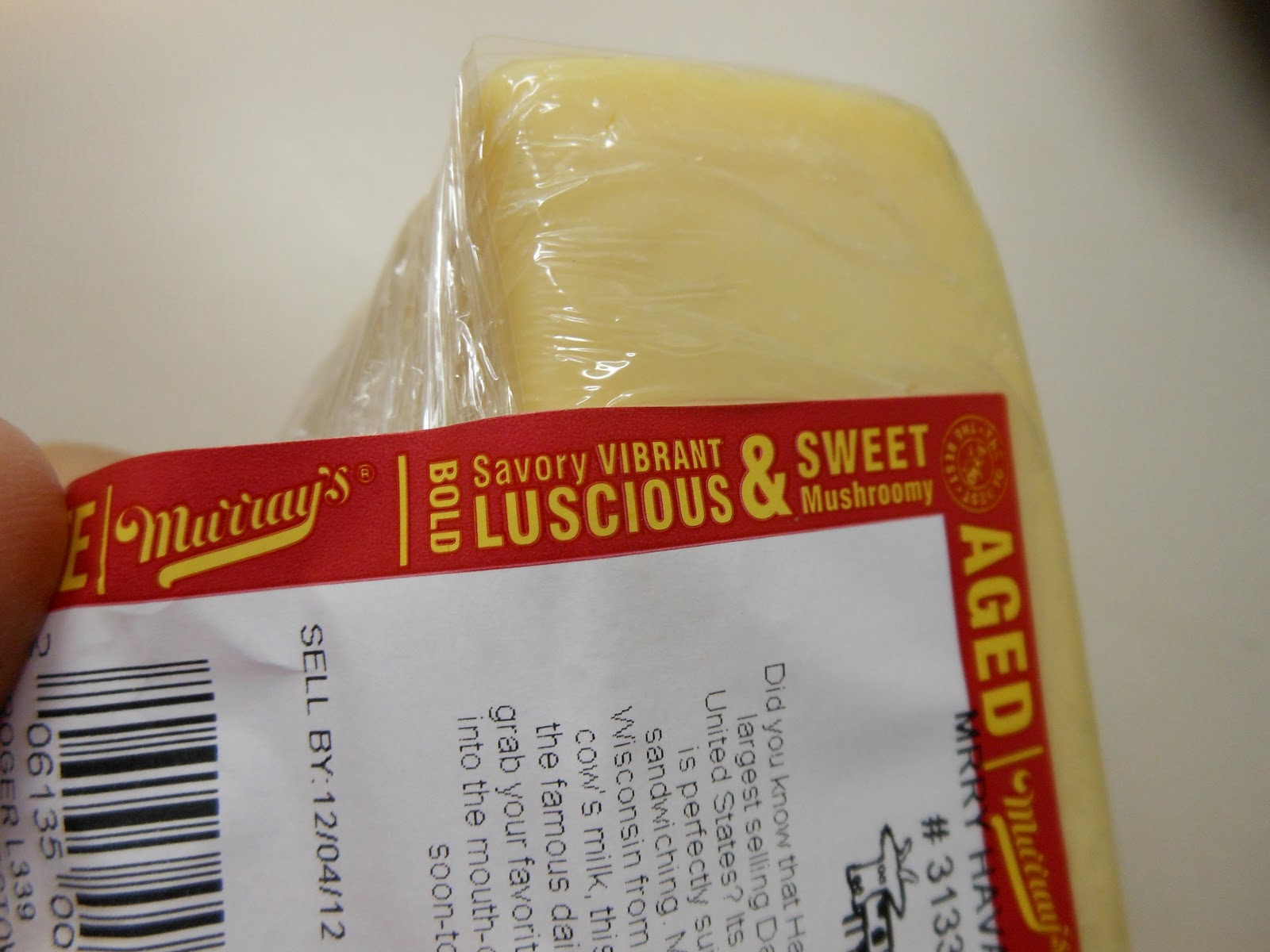
Last week my husband bought me some havarti cheese, one of my favorites, and this morning I decided to have some for breakfast. But when I took the new package out of the fridge I was momentarily appalled.
"What -- you bought me cheese that's pervasive, stinky and lingering????" I shrieked.
But on closer examination I realized that some marketing genius had decided to festoon the labels with every conceivable adjective that could be applied to cheese.

It might be a good marketing ploy to label your cheese with an accurate description, especially if you're trying to tempt buyers into trying something new. But it strikes me as dumb to label your cheese as everything. I suspect a lot of buyers will -- just as I did -- spy one or two of the adjectives on the label and quickly decide it's not for them.
Meanwhile, the havarti wasn't even as good as the (cheaper) stuff we used to get at the same cheese counter. I ate it anyway, but will not be returning to the fancy new cheese counter with much enthusiasm.
Last week my husband bought me some havarti cheese, one of my favorites, and this morning I decided to have some for breakfast. But when I took the new package out of the fridge I was momentarily appalled.
"What -- you bought me cheese that's pervasive, stinky and lingering????" I shrieked.
But on closer examination I realized that some marketing genius had decided to festoon the labels with every conceivable adjective that could be applied to cheese.
It might be a good marketing ploy to label your cheese with an accurate description, especially if you're trying to tempt buyers into trying something new. But it strikes me as dumb to label your cheese as everything. I suspect a lot of buyers will -- just as I did -- spy one or two of the adjectives on the label and quickly decide it's not for them.
Meanwhile, the havarti wasn't even as good as the (cheaper) stuff we used to get at the same cheese counter. I ate it anyway, but will not be returning to the fancy new cheese counter with much enthusiasm.
Tuesday, July 17, 2012
What's wrong with this endorsement?
My father took lifelong delight in remembering a label he once saw in a bookstore, on a Bible. In big red letters, the cover proclaimed, "As seen on TV!"
Something distinctly backwards about that marketing slogan.
I thought of that when I noticed the sticker on my banana:
Something distinctly backwards about that marketing slogan.
I thought of that when I noticed the sticker on my banana:
Sunday, March 25, 2012
More package woes
My usual complaint about modern retailing is overpackaging -- wrapping the bread in cellophane inside the plastic bag, sealing things inside that awful clamshell armor. But today my thoughts turn to underpackaging.
I did my best to open the new box of cereal neatly. Tried and tried to separate the edges of the bag without tearing it, but this was the best I could do. I could have cut it open, I suppose, but that would have given me less bag to subsequently fold over inside the box.
And for not the first time, I wondered why cereal doesn't come in a zip lock bag.
Looking at the first site that popped up on Google, I found one-gallon 10x12" ziplock bags at 7 cents apiece if you buy a lot of them, and I bet the buyers at General Foods could negotiate that down quite a bit. Since the cereal already costs $3 or $4 a box, another nickel wouldn't seem to be a dealbreaker.
I would gladly pay the nickel if the box read "seal the goodness in with our exclusive zip lock packaging!!!"
Maybe I need to decant my cereal into my own zip lock bags. I have long kept such bags in the kitchen for frozen waffles, another product that cries for better interior packaging. Am I the only one who hates torn bags and escaping food?
Monday, January 16, 2012
Happy New Package!
At the grocery this morning my husband realized that with the new year we have new packaging for some of our staple foods. He came home grumbling that it took him five minutes to find his cereal, now that it looks different. New bags for the chips, too. I think I like the chip package, since it has a transparent panel that allows you to eyeball what you're buying. That would have saved me a lot of unhappy surprises in the past.
One might wonder why food manufacturers like to change their packages so frequently. A new package design -- especially if it's used on a whole family of products -- is going to easily run into seven figures, if not eight. The company must believe that it's going to quickly make back the big bucks invested in the new look.
One reason for new packaging might be to camouflage the fact that they're putting less food into the same-price package (that doesn't seem to be the case in either of the new ones we found today).
Another is to make things look NEW!!!! and thus to get consumers to eagerly grab that can of sauerkraut that they would have listlessly passed up last week. I've always wondered whether the people who behave that way actually outnumber those like my husband who won't buy anything because he can't find what he's looking for.
Another might be to provide different nutrititional information, or the same info in a different format. Sure enough, both packages have a new panel on the front with four or five bits of information highlighted. You'll still find the traditional panel on the back of the package, same as always.
(Interesting, isn't it, that you get half again as much sodium in a bowl of cereal than in a "serving" of corn chips?)
I recall that we got the first inklings of this new labeling approach a year ago when the food industry touted it as a great new voluntary plan that was going to make us all healthier and happier. Some observers were more cynical, suspecting this was a preemptive move to head off stricter label requirements by the government.
Now that it has appeared in my grocery my curiosity is piqued. Some day when I'm not in a big rush I plan to cruise the aisles and see what other products have the new labels, and what they describe.
And I'll continue to pay attention to the government's efforts to require more meaningful nutritional labels. Who knows, maybe we'll be seeing new packages again next year, and we can grumble about why the corn chips aren't in that familiar turquoise bag any more.
Tuesday, October 11, 2011
Monday, June 20, 2011
Pricing paradox
So which of these two packages of practically identical cheese would you expect to be more expensive?
If you thought the fancy "cheese tray" of presliced cheddar would be the luxury item, you would be wrong. The unit pricing tags reveal the truth:
Yes, even with the chunk o' cheese on card special, it cost more than the fancy sliced tray. Since I've never seen this tray format before, and the package says "new" in big letters, I suspect that they're way underpricing to get us to try the presliced stuff and get hooked. In a month or so it will bounce up to the significantly higher level that they have planned all along as its permanent price.
The moral of this story, of course, is to read the fine print. Which is easy for me on the eye-level shelves, but difficult if not impossible on the high and low ones, thanks to bifocals and rickety knees. I've been known to pull the shelf tags off the shelves so I can read them, and I dare any store employee to give me a hard time over it. (I always try to stick them back where they came from after reading.) You can often find unexpected bargains just by staying alert.
I bought a couple of the fancy cheese trays, and they are really cute! We will enjoy them while the lowball pricing lasts, and probably not ever again.
Thursday, June 9, 2011
Redundant packaging
In my opinion, the plastic bread bag is one of the great inventions of the late 20th century. Waterproof, sturdy enough to hold up to freezer conditions, big enough to stash all kinds of leftovers, the bread bag is perfect to wrap a pakage of hamburger before you stash it in the freezer, hold a damp towel full of salad greens, or protect any sort of dishful in the fridge. We hoard bread bags for lots of food storage tasks.
But if the bread bag serves many purposes, its highest and best use is probably to keep bread, the task for which it was designed.
That being the case, why do high-end bread manufacturers insist on double-wrapping the bread, with a cellophane pack inside the plastic bread bag?
I suspect it's to make you think you're special, that your bread is so delicate that it deserves twice as much packaging as plain old Wonder Bread, that you were RIGHT to spend almost $4 on a loaf!
I beg to differ. That inside cellophane is a pain in the neck, not to mention an unnecessary cost. You need a sharp tool to get it open, and after you start using the bread, the cellophane just sits there impeding your progress toward retrieving a new slice. And there's no good way to just pull the cellophane out and let the bread sit there in its perfect plastic bag.
Take this marketing team back to the kitchen and bring out the other marketing team.
Monday, March 28, 2011
Ready to not eat
Having company over for drinks, and we grabbed a little bag of carrot sticks at the grocery for a healthy complement to the mixed nuts. Fortunately the company said no, no, don't go to that trouble, we'll drink our wine without benefit of snacks.
I say fortunately, because here's what the carrot sticks looked like when I opened the package the next morning. Yuk!
I usually don't buy vegetables that have been processed by somebody else. I've noticed that sometimes the stuff has dried out, like these carrots. It seems intuitive that a carrot will stay fresh and juicy longer if it's in one piece, that lettuce will start to wilt sooner if it's been torn into bite sizes, that broccoli will start to get limp when it's severed from its stalk. And do the vitamins start escaping when the jailhouse door is cut open?
I also am suspicious that the stuff has been sufficiently washed, especially since the bagged spinach scare a couple of years ago. We know that processed meat and eggs create more of a danger of food poisoning than individual eggs or a single steak, because the salmonella or e. coli from one bit of food can get mixed through a big batch and contaminate thousands of servings. By the same token, I wonder whether washing 10,000 carrots in the same vat can simply slosh germ-laden water across lots and lots of little baggies worth of ready to eat.
Yet even with the best of intentions, we sometimes succumb to the lure of the instant salad or snack. I remember buying lots of bagged salads one month when my dad was in the hospital and it was all I could do to get some kind of healthy dinner in front of my mother at the end of the day. I do buy prepared guacamole sometimes instead of making my own from avocados that might not be ripe enough, or be nasty inside when I cut them open. And nobody in my family has yet gotten sick from any of this stuff, so maybe I'm just being paranoid.
sorry, no guacamole tonight
I kind of worry about the people who buy these processed vegetables all the time. Perhaps they're more likely to get a food-borne disease. But even if they don't, think of the quality and the money they're trading away for convenience. Will the kids grow up to think all carrots are dried up and white?
As you might have deduced by the presence of a knife in the photo above, I pulled out the most decrepit of the carrots and diced them up to go into the soup. The rest of the bag became my lunch, and it was just fine, if a little less juicy than home-washed carrots. But I will think twice before I buy one of those cute little baggies of cut vegetables again.
Friday, March 18, 2011
Food processing -- good or bad?
I wrote the other day about my frustration with nutrition labels -- or more accurately, one of my frustrations -- because they don't use a uniform serving size. In response to a comment, I said that the more I read nutrition labels, the less I want to buy what's inside the package, and that the healthiest and best food is that you make yourself.
... and yet... here's my cupboard!
Food processing is a wonderful thing, and people have been taking advantage of it for thousands of years. In a nutshell, it allows you to transcend the inherently short shelf life of food -- to keep your food past its natural spoil date. Early food processing techniques included drying meat and fruits, turning milk into cheese and yogurt, fermenting vegetables into pickles and sauerkraut, preserving foods with spices and salt, transforming grains and grapes into beer and wine.
In the olden days most food processing occurred at home. Prehistoric peoples gorged on a killed animal, then dried the rest of the meat for future use. After agriculture developed, people ground their grains into flour and made their own sausage and kraut. After canning was invented (at the orders of Napoleon, who needed better sustenance to take his armies on longer and longer expeditions of attempted world conquest) people put up the fruits and vegetables from their summer gardens to eat in the winter.
Food processing was time-consuming, but without it you didn't make it through till next year.
Many a housewife must have thought she died and went to heaven when commercially canned foods appeared. Peas and corn and green beans at your fingertips, even if you didn't grow and can them yourself! I remember canned vegetables as a mealtime staple (most of them weren't very good) and I clearly remember the excitement and wonder with which we embraced frozen foods after WW2. Frozen corn and green beans still aren't half bad, even to palates jaded by year-round fresh vegetables from California, Mexico and Chile.
On the whole, American nutrition improved vastly because of the wide variety of fruits and vegetables made available through commercial canning and freezing. Yes, some people had gardens and ate well-balanced meals without benefit of processed food, but most people didn't. How did you grow vegetables if you lived in an apartment, or if you were too feeble to dig in the garden? Even if you had a house with a yard, vegetable gardening was an old-fashioned hobby not practiced by everybody. Remember, they had to have a PR campaign to get people to plant Victory Gardens during the war because the practice had fallen out of favor.
In those post-war wonder years, however, food processing took a turn toward the dark side. Not content with rescuing the American public from malnutrition, the food corporations looked for more and more products, more and more NEW, IMPROVED things to sell us.
Like TV dinners. And you had to buy TV trays on which to eat your TV dinner in front of your TV. My father did not consider TV dinners to be food, so they were served only to the kids on nights when he was out of town (that was a lot, so we ate a fair number of them). (The best part was the compartmented aluminum tray, which prevented the juice from the corn from getting the fried chicken soggy.) The food wasn't awful, but it was sure a step down from the chicken dinner that Mom made, even if Mom used canned corn.
In the fullness of time TV dinners begat frozen pizza and frozen tuna melt sandwiches and frozen sausage-and-egg muffins and a whole raft of combinations that surely do not deserve freezer space in the great supermarket of life. Move out of the frozen food aisle, and you find products where you may not even understand the basic concept -- like Splenda with fiber. Michael Pollan, the guru of sustainable food, calls them "edible foodlike substances." Whatever they are, you know they're overprocessed, unhealthy, and really expensive.
That's one dark side of food processing -- the infinite imagination of Big Food, supported by infinite advertising dollars to make you want to buy the strange things they produce. The other dark side is the inherent chemical requirements of food preservation. You need to add salt and BHT and sodium alginate and a lot of other things not found in your spice cabinet, lest the food get mushy and gray in its can or package. That's not to say that Big Food doesn't add too much of this stuff, particularly salt, but even if you get your groceries from Little Nice Warm And Fuzzy Healthy Food, there have to be some additives.
I've been thinking more and more in recent years about the food I eat and serve, and have concluded that whenever possible, it's desirable to keep my food processing in my own kitchen. Fortunately I have the time to cook from scratch, I enjoy doing it, and I enjoy the rewards of serving food to a hungry, unpicky and appreciative family.
I also know that a lot of people are in different situations, and it's very difficult for them to approach food the way I do. Cutting yourself loose from the sticky tendrils of Big Food is not an easy task.
Subscribe to:
Posts (Atom)